Pauline Favre
NeuroSpin – CEA Paris-Saclay – UNIACT/Clinical Unit – INPULSE



News & Highlights

Fulbright Visiting Scholar Fellowship
Completed a six-month fellowship (January–July 2026) at USC, Keck School of Medicine of USC, hosted by Prof. Paul M. Thompson (Head of ENIGMA consortium) to advance large-scale neuroimaging in mood disorders.
Media & Outreach
YouTube Videos
Watch my talks and presentations (in French and English) on bipolar disorder research, neuroimaging, and neurofeedback.
Latest — PSYTRO-7: psychotrauma at 7 Tesla, project presentation for the Fondation Planiol (in French).
View all videos on YouTube →
Research
My research investigates the cognitive and brain mechanisms underlying mood and emotion dysregulation, with a focus on bipolar disorder and psychotrauma. I combine behavioural approaches, large-scale multimodal neuroimaging, and precision MRI at 3T and 7T to identify biomarkers and understand individual differences. My work also examines how psychotherapies, mental training, and real-time fMRI neurofeedback can modulate brain function and support therapeutic interventions.
I am currently co-head of the INPULSE lab — Imaging Neuroscience and Neuromodulation in Psychiatry (INSERM/CEA NeuroSpin) focusing on translational psychiatry and brain imaging, and member of the board of FIND (AFPBN) — the neuroimaging section of the French Association for Biological Psychiatry & Neuropsychopharmacology. I am also member of the ENIGMA-Bipolar Disorder Working Group.
Keywords
Bipolar Disorder • Emotion Regulation • Mood Disorders • Multimodal Neuroimaging • Neuromodulation • Precision Neuroimaging (3T/7T) • Psychotrauma • Real-Time fMRI Neurofeedback • Translational Neuropsychiatry
Upcoming
PhD defence · 23 November 2026
Julien Delages
Neuro-genetics correlates of mood disorders studied with large populations
PhD defence · 9 December 2026
Chloé Müh
Study of the neural circuits involved in the negative emotional biases in patients with depression and their evolution under Esketamine
Publications
Main publications
- Leclerc, A., Nalborczyk, L., Kauffmann, L., Houenou, J., Berkovitch, L., & Favre, P. (in press). Predictive Biases in Emotional Perception: Differential Influence of Mood and Affective Primes in Individuals with and without Mood Disorders. Neuroscience of Consciousness. Preprint →
- Leclerc, A., Lacroix, A., Mermillod, M., Kauffmann, L. & Favre, P. (2026). Challenging the Predictive Coarse-to-Fine Hypothesis in Emotional Face Perception. Visual Cognition, 34(1), 67-83. DOI →
- Krystal, S., Gracia, L., Piguet, C., Henry, C., Alonso, M., Polosan, M., Savatovsky, J., Houenou, J. & Favre, P. (2024). Functional connectivity of the amygdala subnuclei in various mood states of bipolar disorder. Molecular Psychiatry, 29, 3344-3355. DOI →
- Pindi, P., Houenou, J., Piguet, C. & Favre, P. (2022) Real-time fMRI neurofeedback as a new treatment for psychiatric disorders: A meta-analysis. Progress in Neuropsychopharmacology & Biological Psychiatry, 119, 110605. DOI →
- Favre, P., Kanske, P., Engen, H., & Singer, T. (2021). Decreased emotional reactivity after 3-month socio-affective but not attention- or meta-cognitive-based mental training: A randomized, controlled, longitudinal fMRI study. NeuroImage, 237, 118132. DOI →
- Kebets, V., Favre, P., Houenou, J., Polosan, M., Perroud, N., Aubry, J-M., Van De Ville, D. & Piguet, C. (2021). Fronto-limbic neural variability as a transdiagnostic correlate of emotion dysregulation. Translational Psychiatry, 11(1), 545. DOI →
- Shankland, R., Favre, P., Kotsou, I., & Mermillod, M. (2021). Mindfulness and de-automatization: Effect of mindfulness-based interventions on emotional facial expressions processing. Mindfulness, 12(1), 226-239. DOI →
- Claude, L.A., Houenou, J., Duchesnay, E. & Favre, P. (2020). Will machine learning applied to neuroimaging in bipolar disorder help the clinician? A critical review and methodological suggestions. Bipolar Disorders, 22(4), 334-355. DOI →
- Favre, P., Pauling, M., Stout, J., Hozer, F., Sarrazin, S., Abé, C., Alda, M., Alloza, C., Alonso-Lana, S., Andreassen, O.A., Baune, B.T., [...], Leboyer, M., Mangin, J-F, Henry, C., Duchesnay, E. & Houenou, J. (2019). Widespread white matter microstructural abnormalities in bipolar disorder: evidence from mega- and meta-analyses across 3033 individuals. Neuropsychopharmacology, 44, 2285-2293. DOI →
- Shankland, R., Favre, P., Corubolo, D., Méary, D., Flaudias, V. & Mermillod, M. (2019). Food-Cal: Development of a controlled database of high- and low-calorie food matched with non-food pictures. Eating and Weight Disorders – Studies on Anorexia, Bulimia and Obesity, 24(6), 1041-1050. DOI →
- Favre, P., Houenou, J., Baciu, M., Pichat, C., Poupon, C., Bougerol, T. & Polosan, M. (2016). White Matter Plasticity Induced by Psychoeducation in Bipolar Patients: A Controlled Diffusion Tensor Imaging Study. Psychotherapy and Psychosomatics, 85, 58-60. DOI →
- Favre, P., Polosan, M., Pichat, C., Bougerol, T. & Baciu, M. (2015). Cerebral Correlates of Abnormal Emotion Conflict Processing in Euthymic Bipolar Patients: A Functional MRI Study. PLOS ONE, 10(8), e0134961. DOI →
- Favre, P., Baciu, M., Pichat, C., Bougerol, T. & Polosan, M. (2014). fMRI evidence for abnormal resting-state functional connectivity in euthymic bipolar patients. Journal of Affective Disorders, 165, 182-189. DOI →
- Favre, P., Baciu, M., Pichat, C., De Pourtalès, M.A., Fredembach, B., Garçon, S., Bougerol, T. & Polosan, M. (2013). Modulation of fronto-limbic activity by the psychoeducation in euthymic bipolar patients. A functional MRI study. Psychiatry Research: Neuroimaging, 214(3), 285-295. DOI →
Full publications list
In press
- Leclerc, A., Nalborczyk, L., Kauffmann, L., Houenou, J., Berkovitch, L., & Favre, P. (in press). Predictive Biases in Emotional Perception: Differential Influence of Mood and Affective Primes in Individuals with and without Mood Disorders. Neuroscience of Consciousness. Preprint →
2026
- Dietze, L.M.F., McWhinney, S.R., Favre, P., … Houenou, J., Hajek, T., for the ENIGMA Bipolar Disorder Working Group & ENIGMA BMI-X Working Group (2026). Distinct profiles of white matter diffusivity in obesity and bipolar disorders: An ENIGMA bipolar disorders study in 2166 individuals. Psychological Medicine, 56, e342. DOI →
- Leclerc, A., Lacroix, A., Mermillod, M., Kauffmann, L. & Favre, P. (2026). Challenging the Predictive Coarse-to-Fine Hypothesis in Emotional Face Perception. Visual Cognition, 34(1), 67-83. DOI →
- Nabulsi, L., Kang, M.J.Y., Jahanshad, N., … Favre, P., … Thompson, P.M., Andreassen, O.A., Ching, C.R.K., Cannon, D.M., for the ENIGMA Bipolar Disorder Working Group (2026). Structural Brain Network Alterations in Relation to Treatment and Illness Severity in Bipolar Disorder. Biological Psychiatry. DOI →
- Ng, H.X., Abé, C., Alda, M., … Favre, P., … Thompson, P.M., Andreassen, O.A., Ching, C.R.K., Eyler, L.T., for the ENIGMA Bipolar Disorder Working Group & ENIGMA Brain Age Working Group (2026). Brain aging in bipolar disorder using a neuroimaging and machine learning-derived metric: Findings from the ENIGMA BD Working Group. Journal of Affective Disorders, 403, 121234. DOI →
- Palimaru, I., Etain, B., Leboyer, M., Dansou, Y., Favre, P., Gard, S., Aubin, V., Bellivier, F., Belzeaux, R., Courtet, P., Dubertret, C., Haffen, E., Lefrere, A., Llorca, P.M., Olié, E., Polosan, M., Samalin, L., Schwan, R., Roux, P. & Godin, O. (2026). Association between metabolic syndrome, obesity, and cognitive performances in individuals with bipolar disorders: Cross-sectional and longitudinal analyses in the FACE-BD cohort. Acta Psychiatrica Scandinavica. DOI →
2025
- Dietze, L.M.F., McWhinney, S.R., Favre, P., … Thompson, P.M., Houenou, J., Andreassen, O.A., Ching, C.R.K., Hajek, T., for the ENIGMA Bipolar Disorder Working Group & for the ENIGMA BMI-X Working Group (2025). White matter microstructure in obesity and bipolar disorders: an ENIGMA bipolar disorder working group study in 2,186 individuals. Molecular Psychiatry, 30(5), 1770-1779. DOI →
- King, S., O'Connor, J., Corley, E., … Favre, P., … Thompson, P.M., Andreassen, O.A., Ching, C.R.K., McDonald, C., for the ENIGMA Bipolar Disorder Working Group (2025). Psychotropic medications and their interactions with subcortical brain volume in bipolar disorder: An ENIGMA mega-analysis. Molecular Psychiatry. DOI →
- Laidi, C., Bouaziz, N., Haffen, E., Domenech, P., Duchesnay, E., Favre, P., Fakra, É., Houenou, J., Iftimovici, A., Lefrere, A., Polosan, M., Sescousse, G., Sauvaget, A., & Jardri, R. (2025). Brain imaging and the first success of precision psychiatry. Médecine/Sciences, 41(5), 500-507. DOI →
2024
- Krystal, S., Gracia, L., Piguet, C., Henry, C., Alonso, M., Polosan, M., Savatovsky, J., Houenou, J. & Favre, P. (2024). Functional connectivity of the amygdala subnuclei in various mood states of bipolar disorder. Molecular Psychiatry, 29, 3344-3355. DOI →
2023
- Lefrere, A., Auzias, G., Favre, P., Kaltenmark, I., Houenou, J., Piguet, C., Polosan, M., Eyler, L., Phillips, M., Versace, A., Wessa, M., McDonald, C., Cannon, D., Brambilla, P., Bellani, M., Deruelle, C. & Belzeaux, R. (2023) Global and local cortical folding alterations are associated with neurodevelopmental subtype in bipolar disorders: a sulcal pits analysis. Journal of Affective Disorders, 325, 224-230. DOI →
2022
- King, S., Tronchin, G., Nabulsi, L., … Favre, P., … Thompson, P.M., Andreassen, O.A., Ching, C.R.K., McDonald, C., for the ENIGMA Bipolar Disorder Working Group (2022). Concurrent antiepileptic and antipsychotic use moderates lithium's effects on regional brain volumes: a mega-analysis from the ENIGMA-Bipolar Disorder Working Group. Neuroscience Applied, 1(2), 100395. DOI →
- Pindi, P., Houenou, J., Piguet, C. & Favre, P. (2022) Real-time fMRI neurofeedback as a new treatment for psychiatric disorders: A meta-analysis. Progress in Neuropsychopharmacology & Biological Psychiatry, 119, 110605. DOI →
- S. Sarrazin, C. Poupon, I. Uszynski, A. Teillac, J.F. Mangin, M. Polosan, P. Favre, C. Laidi, M.A. D'Albis, M. Leboyer, P.M. Lledo, C. Henry, L. Emsell, M.K. Shakeel, V.M. Goghari & J. Houenou. (2022). A multicentric multimodal in vivo microscopy MRI study of bipolar disorder reveals axonal loss and demyelination. Neuroscience Applied, 1(2), 100490. DOI →
2021
- Dufumier, B., Gori, P., Victor, J., Grigis, A., Wessa, M., Brambilla, P., Favre, P., Polosan, M., McDonald, C., Piguet, C.M., Phillips, M., Eyler, L. & Duchesnay, E. (2021). Contrastive Learning with Continuous Proxy Meta-data for 3D MRI Classification. In Medical Image Computing and Computer Assisted Intervention – MICCAI 2021, Lecture Notes in Computer Science, pp. 58-68. Springer. DOI →
- Favre, P., Kanske, P., Engen, H., & Singer, T. (2021). Decreased emotional reactivity after 3-month socio-affective but not attention- or meta-cognitive-based mental training: A randomized, controlled, longitudinal fMRI study. NeuroImage, 237, 118132. DOI →
- Han, L.K.M., Dinga, R., Hahn, T., Ching, C.R.K., Eyler, L.T., Aftanas, L., … Favre, P., … Schmaal, L., for the ENIGMA MDD Working Group (2021). Brain aging in major depressive disorder: results from the ENIGMA MDD Working Group. Molecular Psychiatry, 26, 5124-5139. DOI →
- Hozer, F., Sarrazin, S., Laidi, C., Favre, P., Pauling, M., Cannon, D., … Houenou, J. (2021). Lithium prevents grey matter atrophy in patients with bipolar disorder: an international multicenter study. Psychological Medicine, 51(7), 1201-1210. DOI →
- Kebets, V., Favre, P., Houenou, J., Polosan, M., Perroud, N., Aubry, J-M., Van De Ville, D. & Piguet, C. (2021). Fronto-limbic neural variability as a transdiagnostic correlate of emotion dysregulation. Translational Psychiatry, 11(1), 545. DOI →
- Shankland, R., Favre, P., Kotsou, I., & Mermillod, M. (2021). Mindfulness and de-automatization: Effect of mindfulness-based interventions on emotional facial expressions processing. Mindfulness, 12(1), 226-239. DOI →
2020
- Ching, C.R.K., Hibar, D.P., Gurholt, T.P., Nunes, A., … Favre, P., … Thompson, P.M., Andreassen, O.A., for the ENIGMA Bipolar Disorder Working Group (2020). What we learn about bipolar disorder from large-scale neuroimaging: Findings and future directions from the ENIGMA Bipolar Disorder Working Group. Human Brain Mapping. DOI →
- Claude, L.A., Houenou, J., Duchesnay, E. & Favre, P. (2020). Will machine learning applied to neuroimaging in bipolar disorder help the clinician? A critical review and methodological suggestions. Bipolar Disorders, 22(4), 334-355. DOI →
- Kochunov, P., Hong, L.E., Dennis, E.L., Morey, R.A., Tate, D.F., Wilde, E.A., … Favre, P., … Jahanshad, N. (2020). ENIGMA-DTI: Translating reproducible white matter deficits into personalized vulnerability metrics in cross-diagnostic psychiatric research. Human Brain Mapping. DOI →
- Nunes, A., Schnack, H.G., Ching, C.R.K., Agartz, I., … Favre, P., … Hajek, T., for the ENIGMA Bipolar Disorders Working Group (2020). Using structural MRI to identify bipolar disorders – 13-site machine learning study in 3020 individuals. Molecular Psychiatry, 25(9), 2130-2143. DOI →
- Thompson, P.M., Jahanshad, N., Ching, C.R.K., Salminen, L.E., … for the ENIGMA Consortium (2020). ENIGMA and global neuroscience: A decade of large-scale studies of the brain in health and disease across more than 40 countries. Translational Psychiatry, 10, 100. DOI →
2019
- Favre, P., Pauling, M., Stout, J., Hozer, F., Sarrazin, S., Abé, C., Alda, M., Alloza, C., Alonso-Lana, S., Andreassen, O.A., Baune, B.T., [...], Leboyer, M., Mangin, J-F, Henry, C., Duchesnay, E. & Houenou, J. (2019). Widespread white matter microstructural abnormalities in bipolar disorder: evidence from mega- and meta-analyses across 3033 individuals. Neuropsychopharmacology, 44, 2285-2293. DOI →
- Laidi, C., Hajek, T., Spaniel, F., Kolenic, M., d'Albis, M.A., Sarrazin, S., Mangin, J.F., Duchesnay, E., Brambilla, P., Wessa, M., Linke, J., Polosan, M., Favre, P., Versace, A.L., Phillips, M.L., Manjon, J.V., Romero, J.E., Hozer, F., Leboyer, M., Coupe, P. & Houenou, J. (2019). Cerebellar parcellation in schizophrenia and bipolar disorder. Acta Psychiatrica Scandinavica, 140(5), 468-476. DOI →
- Sarrazin, S., Poupon, C., Teillac, A., Mangin, J-F., Polosan, M., Favre, P., … Houenou, J. (2019). Higher in vivo cortical intracellular volume fraction associated with lithium therapy in bipolar disorder: a multicenter NODDI study. Psychotherapy & Psychosomatics, 88(3), 171-176. DOI →
- Shankland, R., Favre, P., Corubolo, D., Méary, D., Flaudias, V. & Mermillod, M. (2019). Food-Cal: Development of a controlled database of high- and low-calorie food matched with non-food pictures. Eating and Weight Disorders – Studies on Anorexia, Bulimia and Obesity, 24(6), 1041-1050. DOI →
2018
- Sarrazin, S., Cachia, A., Hozer, F., McDonald, C., Emsell, L., Cannon, D.M., Wessa, M., Linke, J., Versace, A., Hamdani, N., d'Albis, M.A., Delavest, M., Phillips, M.L., Brambilla, P., Bellani, M., Polosan, M., Favre, P., Leboyer, M., Mangin, J-F., & Houenou, J. (2018). Neurodevelopmental subtypes of bipolar disorder are related to cortical folding patterns: An international multicenter study. Bipolar Disorders, 20(8), 721-732. DOI →
2017
- Kibleur, A., Polosan, M., Favre, P., Rudrauf, D., Bougerol, T., Chabardès, S., David, O. (2017). Stimulation of subgenual cingulate area decreases limbic top-down effect on ventral visual stream: A DBS-EEG pilot study. NeuroImage, 146, 544-553. DOI →
2016
- Favre, P., Houenou, J., Baciu, M., Pichat, C., Poupon, C., Bougerol, T. & Polosan, M. (2016). White Matter Plasticity Induced by Psychoeducation in Bipolar Patients: A Controlled Diffusion Tensor Imaging Study. Psychotherapy and Psychosomatics, 85, 58-60. DOI →
- Morris, L. S., Kundu, P., Dowell, N., Mechelmans, D. J., Favre, P., Irvine, M. A., [...] & Voon, V. (2016). Fronto-Striatal Organization: Defining Functional and Microstructural Substrates of Behavioural Flexibility. Cortex, 74, 118-133. DOI →
2015
- Favre, P., Polosan, M., Pichat, C., Bougerol, T. & Baciu, M. (2015). Cerebral Correlates of Abnormal Emotion Conflict Processing in Euthymic Bipolar Patients: A Functional MRI Study. PLOS ONE, 10(8), e0134961. DOI →
2014
- Favre, P., Baciu, M., Pichat, C., Bougerol, T. & Polosan, M. (2014). fMRI evidence for abnormal resting-state functional connectivity in euthymic bipolar patients. Journal of Affective Disorders, 165, 182-189. DOI →
2013
- Favre, P., Baciu, M., Pichat, C., De Pourtalès, M.A., Fredembach, B., Garçon, S., Bougerol, T. & Polosan, M. (2013). Modulation of fronto-limbic activity by the psychoeducation in euthymic bipolar patients. A functional MRI study. Psychiatry Research: Neuroimaging, 214(3), 285-295. DOI →
Preprints
- Parker, N., O'Connell, K.S., Shadrin, A.A., Parekh, P., … Favre, P., … Thompson, P.M., Dale, A.M., Ching, C.R.K. & Andreassen, O.A. (2026). An Imaging Risk Score for Bipolar Disorder: Multimodal Comparison and Integration with Polygenic Risk. medRxiv. Preprint →
- Delages, J., Boureau, U., Laidi, C., Cogneau, B., Neu, N., Frouin, V., Grigis, A., Jamain, S., Duchesnay, E., Favre, P. & Philippe, C. (2026). Neuro-genetic correlates of mood dysregulation in the general population. HAL Preprints (in revision, Biological Psychiatry). Preprint →
- Petiton, S., Grigis, A., Dufumier, B., Wessa, M., Brambilla, P., Polosan, M., McDonald, C., Piguet, C., Phillips, M.L., Eyler, L., Chavas, J., Frouin, V., Houenou, J., Favre, P., Laidi, C., Bourgin, J. & Duchesnay, E. (2026). Surface and Voxel-based Brain Morphometric Representations are Synergistic for Individual-Level Prediction of Bipolar Disorder. HAL Preprints (submitted). Preprint →
Submitted / In revision
- Pindi, P., Thirion, B., Houenou, J. & Favre, P. Decoding negative emotions during visual perception and regulation with fMRI: an MVPA study (Imaging Neuroscience, in revision).
- Neu, N., Favre, P., … & Laidi, C., for the ENIGMA Bipolar Disorder Working Group. Individualized Structural Brain Deviations in Bipolar I Disorder: a Normative Modeling Study of 4,660 ENIGMA Participants (submitted).
- Harquel, S., Raffin, E., Favre, P., Leroy, C., Passera, B., Beynel, L., Neige, C., Cousin, E., Pichat, C., Chion, C., Pouchon, A., David-Tchouda, S., David, O. & Polosan, M. Personalized neuromodulation targeting inhibitory control circuits in obsessive-compulsive disorder (submitted).
- Müh, C., Favre, P., Lutkenherm, I., Zambrano Yanez, J., Henry, C. & Berkovitch, L. Emotional Bias and Response Criterion as Markers of Esketamine Response in Treatment-Resistant Depression (European Neuropsychopharmacology, submitted).
- Favre, P., Flaudias, V., Corubolo, D., Mermillod, M & Shankland, R. Be Mindful, Be Healthy: Impulse Towards Caloric Food Pictures Decreases After Mindfulness Training (Appetite).
In preparation
- Krystal, S.+, Rogé, N.+, Piguet, C., Polosan, M., Savatovsky, J., Houenou, J. & Favre, P. Interhemispheric resting-state functional connectivity in bipolar disorder.
- Favre, P., Louiset, R., Duchesnay, E., Houenou, J., & the ENIGMA Bipolar Disorder DTI Working Group. Classifying and Subgrouping patients with bipolar disorder based on DTI data: A Machine Learning Study from the ENIGMA Bipolar Disorder Working.
- Favre, P. & Singer, T. How meditation shapes your thoughts? Exploration of the effects of three mental trainings on socio-temporo-emotional content of mindwandering.
- Euterio, J., Favre, P., Delorme, R., Walter, M., Houenou, J. & Coulon, N. Brain abnormalities in neurodevelopmental psychiatric disorders: comparison between VEOS, ASD and typically developed children.
Book Chapters
Brossollet, I., Gallet, Q., Favre, P. & Houenou, J. (2023). Machine Learning and Brain Imaging for Psychiatric Disorders: New Perspectives. In Coulon, O. (Ed.) Machine Learning for Brain Disorders. NY: Springer US; p. 1009–1036. OPEN ACCESS →

Mermillod, M., Favre, P. & Vermulen, N. (2021). Neurosciences Affectives. In Luminet, O. (Ed.) Psychologie des Emotions. Be: De Boeck.

Vrticka, P., Favre, P. & Singer, T. (2017). Compassion and the brain. In Gilbert, P. (Ed.) Compassion: Concepts, Research and Applications. London, UK: Routledge.

Polosan, M. & Favre, P. (2015) Imagerie des Troubles Bipolaires. In Fossati, P. (Ed.). Imagerie Cérébrale en Psychiatrie. Contributions Physiopathologiques de la Neuro-Imagerie. Paris: Lavoisier/Médecine Sciences.
Vulgarisation
- Favre, P. (septembre 2025). Contribution à Cerveau & Psycho N°179 — Numéro spécial sur le trouble bipolaire. Lire →
- Polosan, M. & Favre, P. Troubles bipolaires : des connexions cérébrales anormales, Science & Santé n°21 sep/oct 2014, p.20-21.
PhD Thesis
Download my PhD thesis → (Université Grenoble Alpes, 2014)
Projects
Now recruiting: Neurofeedback (NeuroFeed-BD), ultra-high field MRI (B37T) in Bipolar Disorder, PSYTRO-7, and FrenchMinds.
PSYTRO-7 (Fondation Planiol 2025)

Recruiting
Psychotrauma at 7 Tesla: Understanding the neural mechanisms of emotional dysregulation in psychotrauma
Fondation Planiol Project Page →
PI: Pauline Favre
Collaborators: Lisa Pontoni (PhD student), Geraldine Tapia (PhD co-supervisor, Univ. Bordeaux), Charles Laidi (APHP, Créteil), Noomane Bouaziz (EPS de Ville-Évrard), Marc-Antoine d'Albis (GHU, Sainte-Anne)
This project investigates the cerebral and cognitive mechanisms underlying psychotrauma using ultra-high field 7T MRI. We focus on the bidirectional relationship between autobiographical memory and emotion regulation, aiming to identify circuit-based targets for innovative therapeutic interventions such as transcranial magnetic stimulation (TMS) and neurofeedback. By combining advanced 7T neuroimaging with cognitive tasks and clinical questionnaires, this research seeks to uncover how autobiographical memories interact with emotional regulation systems in the brain, with the ultimate goal of developing precision psychiatry approaches for trauma-related disorders.
B37T (ANR JCJC 2022)

Recruiting
The Bipolar Bayesian Brain at 7T: Mood disturbances in bipolar disorder studied with ultra-high field MRI
PI: Pauline Favre
Collaborators: Alexane Leclerc (PhD student), Lucie Berkovitch (PhD co-supervisor), Charles Laidi (APHP, Créteil), Romain Sayous (APHP, Créteil), Sylvie Berthoz (INCIA, Univ. Bordeaux), Louise Kauffmann (LPNC, Univ. Grenoble)
Bipolar disorder (BD) is a chronic mood disorder characterized by emotional hyperresponsiveness during acute periods (i.e., mania and depression), as well as during periods of remission (i.e., euthymia). Current neurocognitive models suggest that lack of cognitive control may be responsible for these symptoms, but do not explain the recurrence of mood cycles in BD. The objective of this project is to clarify the cognitive mechanisms responsible for extreme mood variations in BD and to identify the underlying cerebral correlate. We hypothesize that patients with BD will exhibit an early perceptual bias when processing emotions, that will also be congruent with their mood. On the one hand, regardless of their mood, patients would tend to "over-predict" emotions, leading to "top-down" prediction errors and abnormal connectivity between the amygdala, the orbito-frontal cortex, and the visual system. On the other hand, the valence of this expectation bias would depend on their mood state and would be underpinned by an imbalance of connectivity between the amygdala, the hippocampus, and the nucleus accumbens. We will use ultra-high field MRI (7 Tesla) which, thanks to a very high spatial resolution and a very high signal-to-noise ratio, will allow us to precisely measure the connectivity of these regions. We will employ a dimensional approach, including 60 patients in different mood states: euthymic, depressed, or hypomanic, as well as 30 healthy controls. We will use ecological momentary assessment (EMA) to characterize as precisely as possible the mood of the patients at the time of the MRI scan. From the theoretical perspective, this project will contribute to the modeling of the neurocognitive processes involved in the regulation of mood. From a clinical and societal perspective, it will help to improve the diagnosis of mood disorders and will open new perspectives for the treatment of patients with BD.
Related publications:
Krystal, S., Gracia, L., Piguet, C., Henry, C., Alonso, M., Polosan, M., Savatovsky, J., Houenou, J. & Favre, P. (2024). Functional connectivity of the amygdala subnuclei in various mood states of bipolar disorder. Molecular Psychiatry, 29, 3344-3355. DOI →
Leclerc, A., Lacroix, A., Mermillod, M., Kauffmann, L. & Favre, P. (2026). Challenging the Predictive Coarse-to-Fine Hypothesis in Emotional Face Perception. Visual Cognition, 34(1), 67-83. DOI →
Leclerc, A., Nalborczyk, L., Kauffmann, L., Houenou, J., Berkovitch, L., & Favre, P. (in press). Predictive Biases in Emotional Perception: Differential Influence of Mood and Affective Primes in Individuals with and without Mood Disorders. Neuroscience of Consciousness. Preprint →
NEUROFEED-BD (PHRC National 2018 n°333)
Recruiting
Real-time fMRI neurofeedback as treatment for inter-critical mood symptoms in bipolar disorder: a randomized controlled trial
Scientific director: Pauline Favre
Collaborators: Pamela Pindi (PhD student, 2020–2024), Charles Laidi (main PI, Créteil), Josselin Houenou (main PI, Créteil), Mircea Polosan (co-PI, Grenoble), Sebastien Gard (co-PI, Bordeaux)
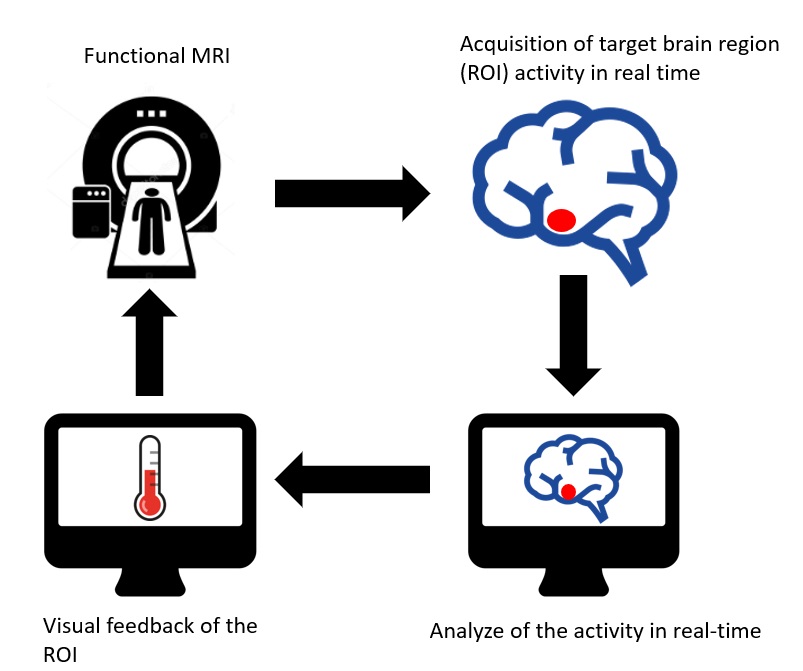
This multicenter national study aims at assessing the efficacy of 3-week neurofeedback training with real-time fMRI on the treatment of residual mood symptoms in patients with BD. I am leading this study with Pr. J. Houenou.
Watch presentation (in French) → UNAFAM Research Award 2018 (in French) →
Related publications:
Pindi, P., Houenou, J., Piguet, C. & Favre, P. (2022). Real-time fMRI neurofeedback as a new treatment for psychiatric disorders: A meta-analysis. Progress in Neuro-Psychopharmacology & Biological Psychiatry, 119, 110605. DOI →
French MINDS Cohort (PEPR PROPSY)

Recruiting
Large-scale multimodal neuroimaging cohort for precision psychiatry
PI: Prof. Marion Leboyer — MRI part: Charles Laidi
The French MINDS cohort is a flagship initiative of the PEPR PROPSY (Programme de Recherche Exploratoire en Psychiatrie) program, part of France 2030. This large-scale, multicentre cohort aims to collect high-quality, harmonized multimodal data (including multi-omics) in 10,000 subjects (patients and controls) with bipolar disorder, schizophrenia, major depression, and autism spectrum disorders to advance precision psychiatry and validate biomarkers for psychiatric disorders. I am a member of the neuroimaging group contributing to the design and implementation of advanced imaging protocols for this national cohort study.
Related publications:
Laidi, C., Bouaziz, N., Haffen, E., Domenech, P., Duchesnay, E., Favre, P., Fakra, É., Houenou, J., Iftimovici, A., Lefrere, A., Polosan, M., Sescousse, G., Sauvaget, A., & Jardri, R. (2025). Brain imaging and the first success of precision psychiatry. Médecine/Sciences, 41(5), 500-507. DOI →
ENIGMA Consortium
Large-scale international neuroimaging studies of mood and psychotic disorders
Project website → | Interview about the project →
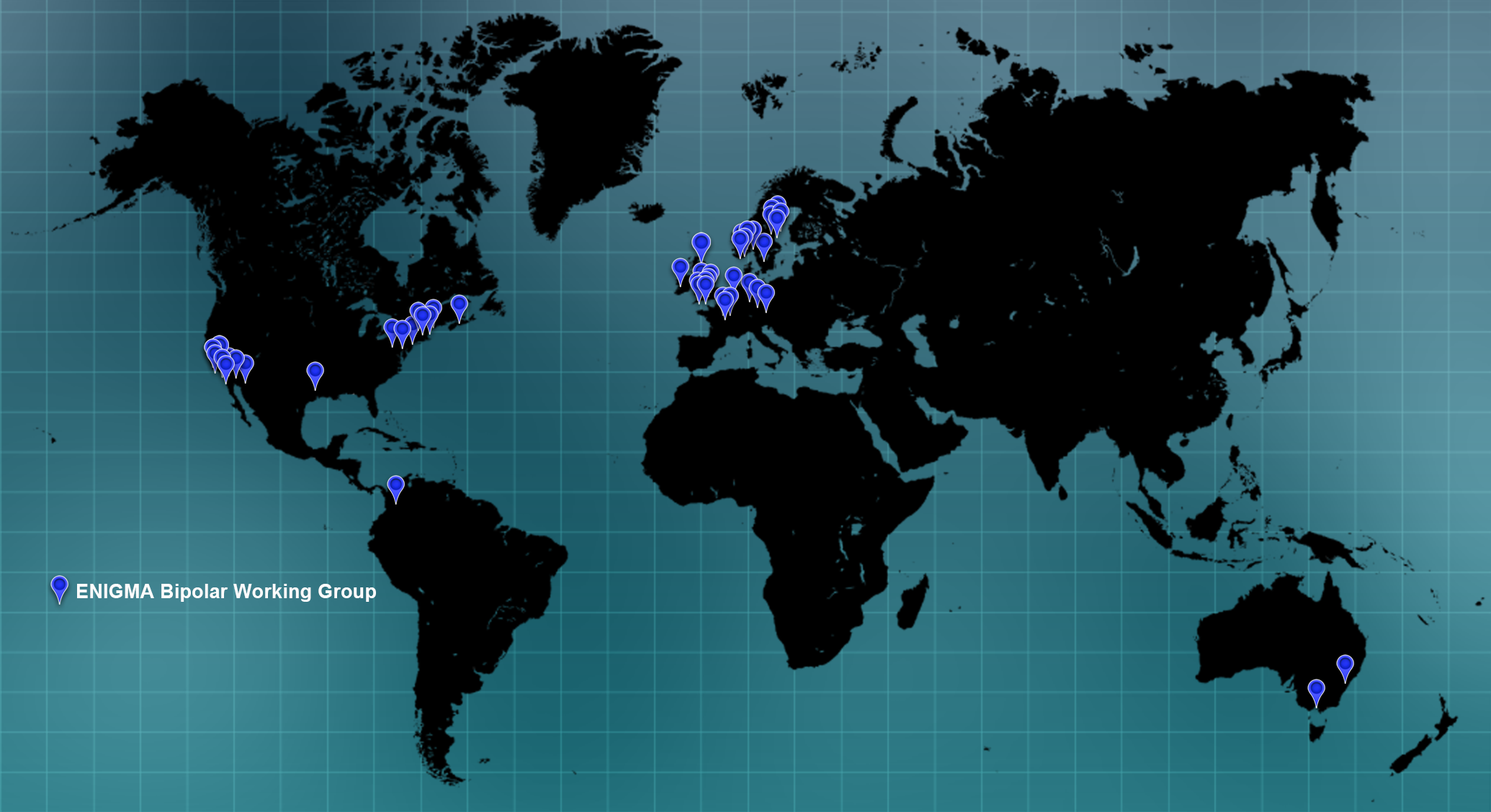
Within the ENIGMA consortium, my work spans three lines of research.
1. CROSS-MIND
Multimodal Neuroimaging and Machine Learning for Transdiagnostic Stratification of Mood and Psychotic Disorders
With the ENIGMA Bipolar Disorder, Major Depressive Disorder and Schizophrenia Working Groups.
PI: Pauline Favre
Collaborators: Kamal Achalhi (PhD student), Edouard Duchesnay (PhD co-supervisor)
2. Resting-state fMRI in bipolar disorder
Amygdala subnuclei functional connectivity in bipolar disorder: links to mood state and clinical dimensions
With the ENIGMA Bipolar Disorder Working Group.
PI: Pauline Favre
Related publications:
Krystal, S., Gracia, L., Piguet, C., Henry, C., Alonso, M., Polosan, M., Savatovsky, J., Houenou, J. & Favre, P. (2024). Functional connectivity of the amygdala subnuclei in various mood states of bipolar disorder. Molecular Psychiatry, 29, 3344-3355. DOI →
3. Large-scale studies of bipolar disorder
White matter microstructure, brain age, normative modelling, structural networks and medication effects
With the ENIGMA Bipolar Disorder Working Group.
In this multi-center international study, conducted under the umbrella of the ENIGMA consortium, I am working with DTI data from about 3000 subjects (half patients with bipolar disorder, half controls) from 26 cohorts, thus constituting the largest DTI database of bipolar patients known today. My goal is to identify reliably and reproducibly, with the use of machine learning algorithms, white matter microstructural abnormalities that could characterize these patients.
BD-DTI project PI: Prof. Josselin Houenou (Neurospin, CEA Paris-Saclay; APHP-Hopital Henri-Mondor, Créteil)
I also contribute to collaborative ENIGMA studies of brain age, normative modelling of individual brain deviations, structural brain networks, obesity-related white matter alterations, and the effects of psychotropic medications on brain structure.
Related publications:
Favre, P., Pauling, M., Stout, J., Hozer, F., Sarrazin, S., Abé, C., et al. (2019). Widespread white matter microstructural abnormalities in bipolar disorder: evidence from mega- and meta-analyses across 3033 individuals. Neuropsychopharmacology, 44, 2285–2293. DOI →
Claude, L.A., Houenou, J., Duchesnay, E. & Favre, P. (2020). Will machine learning applied to neuroimaging in bipolar disorder help the clinician? A critical review and methodological suggestions. Bipolar Disorders, 22(4), 334–355. DOI →
Neu, N., Favre, P., et al. Individualized Structural Brain Deviations in Bipolar I Disorder: a Normative Modeling Study of 4,660 ENIGMA Participants. (Submitted)
Favre, P., Louiset, R., Duchesnay, E., Houenou, J., & the ENIGMA Bipolar Disorder DTI Working Group. Classifying and Subgrouping patients with bipolar disorder based on DTI data: A Machine Learning Study from the ENIGMA Bipolar Disorder Working. (In preparation)
EMOKET (ANR 2022)
Translational study of neural circuits underlying negative emotional biases in depressive disorders and their response to ketamine
PI: Prof. Chantal Henry (GHU Paris Psychiatrie et Neurosciences)
Collaborators: Chloé Müh (PhD student, co-supervised with Prof. Chantal Henry)
Depressive episodes are among the leading factors in disability worldwide, affecting up to 300 million people annually. Beyond the sad mood, depressed patients exhibit a negative emotional bias (NEB), which involves assigning more negative valences to stimuli salient enough to trigger emotion. The effectiveness of antidepressants in restoring mood requires correction of this bias.
This translational project combines preclinical and clinical approaches to study these mechanisms. In mice with a depressive phenotype, the project investigates how altered activity of neuronal subpopulations in the basolateral amygdala (BLA) leads to NEBs, and how different classes of antidepressants—particularly ketamine and SSRIs—can reverse these biases and restore normal BLA circuit activity. In parallel, the clinical study evaluates emotional biases in depressed patients before and after ketamine treatment, examining changes in amygdala activation and connectivity using functional imaging.
I contribute as a partner to the neuroimaging component of this project and co-supervise the PhD thesis of Chloé Müh, who is investigating emotional bias changes before and after esketamine treatment using newly developed behavioural tasks and 3T fMRI.
The ReSource Project

Large-scale longitudinal study on meditation-based mental training
PI: Prof. Dr. Tania Singer (MPI, Leipzig, Germany)
The ReSource project is a large-scale longitudinal study on meditation-based mental training. The goal of this 11-month program is to cultivate compassion, gratitude, motivation pro-social, etc. but also to improve subjective well-being and health through different mental training modules (3 months each). The "Presence" module focuses on attention training and interoceptive awareness. The "Affect" module aims to strengthen compassion and gratitude towards others as well as to improve the management of difficult emotions through the training of socio-emotional skills. The objective of the module "Perspective" is to train the socio-cognitive skills, such as theory of mind and metacognitive capacities.
The purpose of my work in this project are i) to evaluate change in emotional reactivity and its associated cerebral network after the overall ReSource program as well as the differential effect the 3 modules; ii) to evaluate change in mindwandering content after these training with an experience sampling paradigm.
Related publications:
Favre, P., Kanske, P., Engen, H., & Singer, T. (2021). Decreased emotional reactivity after 3-month socio-affective but not attention- or meta-cognitive-based mental training: A randomized, controlled longitudinal fMRI study. NeuroImage, 237, 118132. DOI →
Favre, P. & Singer, T. How meditation shapes your thoughts? Exploration of the effects of three mental trainings on socio-temporo-emotional content of mindwandering. (In preparation)
BIPED
Brain abnormalities underlying emotional and cognitive disorders in bipolar disorders
PI: Prof. Mircea Polosan (CHU/GIN, Grenoble, France)
The BiPed project is my PhD project. The objectives of this project were, first, to identify brain abnormalities underlying emotional and cognitive disorders in bipolar disorders, and second, to identify how psychoeducation, a specific and structured psychosocial intervention, can modulate these brain abnormalities.
Related publications:
Favre, P., Baciu, M., Pichat, C., De Pourtalès, M.A., Fredembach, B., Garçon, S., Bougerol, T. & Polosan, M. (2013). Modulation of fronto-limbic activity by psychoeducation in euthymic bipolar patients. A functional MRI study. Psychiatry Research: Neuroimaging, 214(3), 285–295. DOI →
Favre, P., Baciu, M., Pichat, C., Bougerol, T. & Polosan, M. (2014). fMRI evidence for abnormal resting-state functional connectivity in euthymic bipolar patients. Journal of Affective Disorders, 165, 182–189. DOI →
Favre, P., Polosan, M., Pichat, C., Bougerol, T. & Baciu, M. (2015). Cerebral Correlates of Abnormal Emotion Conflict Processing in Euthymic Bipolar Patients: A Functional MRI Study. PLOS ONE, 10(8), e0134961. DOI →
Favre, P., Houenou, J., Baciu, M., Pichat, C., Poupon, C., Bougerol, T. & Polosan, M. (2016). White Matter Plasticity Induced by Psychoeducation in Bipolar Patients: A Controlled Diffusion Tensor Imaging Study. Psychotherapy and Psychosomatics, 85, 58–60. DOI →
MAGTOC
Transcranial magnetic stimulation in the treatment of obsessive-compulsive disorder
PI: Prof. Mircea Polosan (CHU/GIN, Grenoble, France)
This clinical study aims to evaluate the effectiveness of transcranial magnetic stimulation (TMS) in the treatment of obsessive-compulsive disorder (OCD). The originality of this study lies in the choice of the target region, which is determined individually by an fMRI task measuring motor impulsivity: the "Stop Signal Task" (SST).
Related publications:
Kibleur, A., Polosan, M., Favre, P., Rudrauf, D., Bougerol, T., Chabardès, S., David, O. (2017). Stimulation of subgenual cingulate area decreases limbic top-down effect on ventral visual stream: A DBS-EEG pilot study. NeuroImage, 146, 544–553. DOI →
Harquel, S., Raffin, E., Favre, P., Leroy, C., Passera, B., Beynel, L., Neige, C., Cousin, E., Pichat, C., Chion, C., Pouchon, A., David-Tchouda, S., David, O. & Polosan, M. Personalized neuromodulation targeting inhibitory control circuits in obsessive-compulsive disorder. (Submitted)
FOVEA
Effects of mindfulness meditation on emotional visual perception and eating behaviors
PI: Rebecca Shankland (LIP/UGA, Grenoble, France)
This project focuses on the effects of the mindfulness meditation FOVEA program on i) low-level emotional visual perception (by manipulating the spatial frequency of images) and ii) on eating behaviors, food impulsivity in particular.
Related publications:
Shankland, R., Favre, P., Corubolo, D., Méary, D., Flaudias, V. & Mermillod, M. (2019). Food-Cal: Development of a controlled database of high- and low-calorie food matched with non-food pictures. Eating and Weight Disorders – Studies on Anorexia, Bulimia and Obesity, 24(6), 1041–1050. DOI →
Shankland, R., Favre, P., Kotsou, I., & Mermillod, M. (2021). Mindfulness and de-automatization: Effect of mindfulness-based interventions on emotional facial expressions processing. Mindfulness, 12(1), 226–239. DOI →
Favre, P., Flaudias, V., Corubolo, D., Mermillod, M & Shankland, R. Be Mindful, Be Healthy: Impulse Towards Caloric Food Pictures Decreases After Mindfulness Training. (Under review)
Grants & Awards
- 2025: Fulbright Visiting Scholar Fellowship — Six-month fellowship completed at USC, Keck School of Medicine of USC (January–July 2026), hosted by Prof. Paul M. Thompson (Head of ENIGMA)
- 2025: Fondation Planiol – PSYTRO-7 grant: €75,000 - Principal Investigator
- 2022-2026: Young researcher grant from the French National Research Agency (ANR): 375k€ - Principal Investigator
- 2019: 2nd price for the "best publication of the year" at the French Congress of Psychiatry
- 2018-2024: Grant from the French hospital clinical research program (PHRC-N): 355k€ - Scientific Director of the project (PI: Pr. Josselin Houenou)
- 2018-2019: Research Grant FondaMental Suisse: 100 kCHF
- 2018: Research Prize « UNAFAM » 2018 — Watch the video (in French) →
- 2013: Travel grant for a 3-month internship at the University of Cambridge (UK). University « Pierre-Mendès France – Grenoble »
- 2011-2014: PhD Fellowship for 3 years (French ministry of education and research) (60k€)
- 2009-2011: Master Fellowship (University of Grenoble)
Previous Positions / Diploma
Current Position
2021 – present — Associate Researcher (tenured), Co-Head of the INPULSE Lab (Imaging Neuroscience and Neuromodulation in Psychiatry)
INSERM U955, Translational Neuropsychiatry Lab & CEA Univ. Paris-Saclay, NeuroSpin, Clinical Unit, France
Previous Positions
2018 – 2021 — Post-doctoral Researcher
INSERM, Mondor Institute for Biomedical Research, Translational Neuropsychiatry Team, France
Topic: MRI, fMRI, Neurofeedback applied to psychiatric disorders
Supervisor: Josselin HOUENOU, MD, PhD
2017 – 2018 — Post-doctoral Researcher
CEA Paris-Saclay, NeuroSpin, Data Analysis Unit, France
Topic: Machine learning applied to neuroimaging data of psychiatric disorders
Supervisor: Edouard DUCHESNAY, PhD
2015 – 2017 — Post-doctoral Researcher
Max Planck Institute for Human Cognitive and Brain Sciences, Department of Social Neuroscience, Germany
Topic: Large-scale longitudinal study on meditation training and cerebral plasticity
Supervisor: Pr. Tania SINGER
2013 — Visiting Researcher (3 months during PhD)
University of Cambridge (UK), Dept. of Psychiatry, Behavioural and Cognitive Neuroscience Institute
Supervisor: Dr. Valerie VOON (MD, PhD)
Education
2024 — "Habilitation" for Full Professorship
Paris East University, France
Title: Emotional dysregulation in mood disorders and clinical applications: behavioral and cerebral investigations
2014 — PhD in Cognitive Sciences, Psychology and Neurocognition
Laboratory of Psychology and Neurocognition, Grenoble Alps University, France
Supervisors: Pr. Monica BACIU (MD, PhD) and Pr. Mircea POLOSAN (MD, PhD)
Title: Fronto-limbic dysfunctions in bipolar disorder and effects of psychosocial therapeutic interventions: investigations with multi-modal MRI
2011 — National Research Master in Neuropsychology and Clinical Neurosciences
Grenoble Alps University, Lyon II University, Toulouse II University, France
Supervisor: Pr. Monica BACIU (MD, PhD)
2009 — Bachelor in Psychology
Grenoble Alps University, Dept. of Psychiatry
2005 — Baccalaureate in Science (Speciality: Biology)
Talks & Communications
Symposium and Oral presentations (selected/invited)
- Favre, P. Cognitive and Affective Mechanisms of Mood Dysregulation: A Multimodal Neuroimaging Perspective. Psychology Department Seminar, University of Southern California, USA. February 2026.
- Favre, P. Multi-Scale Neuroimaging of Mood Disorders: From Population Studies to Ultra-High-Field MRI. Imaging Genetics Center (IGC) Seminar, University of Southern California, USA. February 2026.
- Favre, P. Decoding Mood Variability in Bipolar Disorder: From predictive emotion biases to circuit-based targets. European College of Neuropsychopharmacology (ECNP), Amsterdam, Late Breaking Symposium. 2025.
- Favre, P. Dysrégulation émotionnelle et connectivité cérébrale : une perspective transdiagnostique. Congrès Français de Psychiatrie (CFP), Cannes, Selected Symposium. 2025.
- Favre, P. et al. for the ENIGMA Bipolar Disorder DTI Working Group, Predicting and Clustering Bipolar Disorder Based on White Matter microstructure: A Machine Learning Study across 3033 Individuals from the Enigma Bipolar Disorder Working Group. 78th meeting of the Society of Biological Psychiatry (SOBP), San Diego, USA. April 2023.
- Favre, P., Pindi, P., Krystal, S. & Houenou, J. Neurofunctional changes in emotional processes after cognitive training in psychiatric disorders. European Association of Clinical Psychology and Psychological Treatment (EACLIPT) conference, Warsaw, Poland. November 2022.
- Favre, P. & Houenou, J. fMRI-based neurofeedback of the amygdala in bipolar disorder. European congress of psychiatry. Madrid, Mars 2020 (online).
- Favre, P., Duchesnay E., Houenou, J. for the ENIGMA Bipolar Disorder DTI Working Group. Classification and clustering of patients with Bipolar Disorder (BD) based on DTI data: Relationship with clinical dimensions. 14th World Congress of Biological Psychiatry (WFSBP), Vancouver, Canada. June 2019.
- Favre, P., Duchesnay E., Houenou, J. for the ENIGMA Bipolar Disorder DTI Working Group. Classification of Patients With Bipolar Disorder Based on DTI Data: Relationship With Clinical Dimensions. 73nd meeting of the Society of Biological Psychiatry (SOBP), New York City, USA. May 2018.
- Favre, P., Houenou, J., Sarrazin, S., Pauling, M., Henry, C., for the ENIGMA Bipolar Disorder DTI Working Group. Brain networks and bipolar disorder: what can we learn from large-scale neuroimaging studies. 72nd meeting of the Society of Biological Psychiatry (SOBP), San Diego, USA. May 2017.
- Favre, P. & Singer, T. Lessons from the ReSource project: Behavioral and brain changes in affective processing after a 9-month longitudinal mental training program. 8th European Conference of Positive Psychology (ECPP), Angers, France. June 2016.
Oral Communications in National Conferences
- Favre, P. Régulation émotionnelle et troubles de l’humeur : Substrats neurocognitifs et innovations thérapeutiques. Rencontres annuelles de l'Organisation Française des Psychologues spécialisés en Neuropsychologie (OFPN), Paris, Avril, 2023.
- Favre, P. & Pindi, P. Le neurofeedback en IRMf temps-reel comme un nouveau traitement des troubles psychiatriques: une meta-analyse. 6ième Journée Nationale du Neurofeedback, Bordeaux, France. Sept., 2022.
- Favre, P. & Polosan, M. Le gyrus frontal inférieur : « hub » du contrôle émotionnel dans le trouble bipolaire. 11ième Congrès Français de Psychiatrie, Nice, Favre. Décembre, 2019.
- Favre, P. & Houenou, J. Le neurofeedback IRMf : des neurosciences cognitives à l'application thérapeutique en psychiatrie. 4ième Journée Nationale du Neurofeedback, Bordeaux, France. Mai, 2019.
- Favre, P., Baciu, M., Pichat, C., Bougerol, T. & Polosan, M. What can we learn with multimodal MRI ? Apport de l’IRM multimodal pour une vision intégrée du fonctionnement cognitif sain et pathologique : exemple de l’étude de l’activité, de la connectivité et l’anatomie cérébrale dans la maladie bipolaire. 5ième rencontres du Pôle Cognition, Grenoble, France, Juin 2014.
- Favre, P., Polosan, M., Pichat, C., De Pourtalès, M.A., Fredembach, B., Garçon, S., Bougerol, T. & Baciu, M. Psychoéducation et maladie bipolaire : Corrélats anatomofonctionnels avec IRMf. Journées de la recherche médicale, Grenoble, France, May 2012.
Conferences Proceedings, Workshops and Poster presentations
2026
- Rodrigues Da Rocha, M., Pindi, P., Leprince, Y., Koush, Y., Chabert, J., Dufrenne, O., Camil, J., Piguet, C., Warnking, J., Lamalle, L., Dilharreguy, B., Polosan, M., Gard, S., Laidi, C., Houenou, J. & Favre, P. Pre-unblinding assessment of feasibility, data quality, and neural modulation in an ongoing RT-fMRI neurofeedback trial for bipolar disorder: interim findings from NEUROFEED-BD. Real-Time Functional Imaging and Neurofeedback (rtFIN) conference. Geneva, Switzerland. Oct 2026.
2022
- Pindi, P., Piguet, C., Koush, Y., Polosan, M., Gard, S., Houenou, J. & Favre, P.. Real-time fMRI decoded neurofeedback: a pilot study on emotion regulation processes. Real-Time Functional Imaging and Neurofeedback (rtFIN) conference. Yale, USA. Oct 2023.
- Krystal, S., Gracia, L, Piguet, C., Polosan, M., Savatovsky, J., Houenou, J., Favre, P.. Functional connectivity of the amygdala nuclei in bipolar disorder: a multicentric study. Annual meeting of the Organisation for Human Brain Mapping (OHBM), Glasgow, UK. June 2022.
- Pindi, P., Piguet, C., Houenou, J. & Favre, P.. Decoded neurofeedback with real-time fMRI: A pilot study of emotion regulation processes. Annual meeting of the Organisation for Human Brain Mapping (OHBM), Glasgow, UK. June 2022.
- Favre, P, Pindi, P., Piguet, C. & Houenou, J. Decoding emotion regulation processes: A pilot fMRI study. Alpine Brain Imaging Meeting (ABIM). Champéry, Swistzerland. January 2022.
2019
- Favre, P, Fernandez , N., Piguet, C., Poupon, C. & Houenou, J. Real-time fMRI neurofeedback as treatment for intercritical mood symptoms in bipolar disorder: a randomized controlled trial. Real-Time Functional Imaging and Neurofeedback (rtFIN) conference. Maastricht, Pays-Bas. Dec 2019.
- Favre, P., Duchesnay, E. & Houenou, J for the ENIGMA Bipolar Disorder DTI Working Group. Subgrouping of patients with bipolar disorder based on DTI data, 25th annual meeting of the Organisation for Human Brain Mapping, Rome, Italy. June 2019.
2017
- Favre, P., Duchesnay, E. & Houenou, J. Classification of patients with Bipolar Disorder based on DTI data: relationship with clinical dimensions. Proceedings of the Computational Brain Connectivity Mapping (CoBCoM) workshop, Juan-les-Pins, France. November 2017.
- Hozer, F., Sarazzin, S., Duchesnay, E., Pauling, M., Mangin, J.F., Polosan, M., Favre, P., Wessa, M., Linke, J., Versace, A., Phillips, M., Brambilla, P., McDonald, C., Emsell, L., Bellivier, F., Leboyer, M., Houenou, J. Could lithium prevent the bipolar disorder brain atrophy? Abstracts of the 30th ECNP Congress, European Neuropsychopharmacology, 27 (4), S521-S1181.
- Favre, P., Baciu, M., Perrin, A., Pichat, C., Bougerol, T. & Polosan, M. Neuroanatomical Predictors of the Psychoeducation Outcome in Bipolar patients: A Combined Voxel-Based Morphometry and Diffusion Tensor Imaging Study. 72nd meeting of the Society of Biological Psychiatry (SOBP), San Diego, USA. May 2017.
2016
- Raffin, E., Harquel, S. Favre, P., Beynel, L., Siebner, H.R., David, O. & Polosan, M. Linking dysfunctional premotor-to-motor connectivity to disease severity of obsessive-compulsive disorder – a robotic dual-site TMS study. 10th FENS Forum of Neuroscience, Copenhagen, Denmark. July 2016.
- Corubolo, D., Shankland, R., Favre, P., Tessier, D., Beffara, B. & Mermillod, M. Effects of Mindfulness on Emotion Regulation and Health Behaviors. 2nd International Conference on Mindfulness (ICM), Rome, Italy, May 2016.
2014
- Favre, P., Baciu, M., Pichat, C., Bougerol, T. & Polosan, M. Impaired Fronto-Limbic Connectivity in Euthymic Bipolar Patients: A Combined Resting-State / DTI Study. 20th OHBM Annual Meeting, Hamburg, Germany. Human Brain Mapping. 1322, 2014.
- Favre, P., Baciu, M., Perrin, A., Pichat, C., Bougerol, T. & Polosan, M. Neuroanatomical predictors of psychoeducation response in euthymic bipolar patients : A Voxel-Based Morphometric study. 16th Annual Conference of the International Society for Bipolar Disorders (ISBD), Seoul, South Korea. Bipolar Disorders. 2014, 16, 88-88.
2013
- Favre, P., Polosan, M., Pichat, C., Bougerol, T. & Baciu, M. Functional connectivity in euthymic bipolar patients: An fMRI resting-state study. 20th Annual Meeting of the Cognitive Neuroscience Society (CNS), San Francisco, USA. Journal of Cognitive Neurosciences. 2013, 96-96.
- Favre, P., Polosan, M., Pichat, C., Bougerol, T. & Baciu, M. Abnormal resting-state functional connectivity in euthymic bipolar patients. 21st European Congress of Psychiatry (EPA), Nice, France. European Psychiatry. 2013, 28(1): A1716.
- Favre, P., Polosan, M., Pichat, C., Bougerol, T. & Baciu, M. Frontal-amygdala alterations during emotional conflict processing in euthymic bipolar patients: a word-face Stroop fMRI study. 11ième Colloque de la Société des Neurosciences, Lyon, France, May 2013.
2012
- Favre, P., Polosan, M., Pichat, C., De Pourtalès, M.A., Fredembach, B., Garçon, S., Bougerol, T. & Baciu, M. The psychoeducation modulates resting-state functional connectivity in euthymic bipolar patients: a preliminary study. 3rd Biennial International Conference on Resting State Brain Connectivity. Brain Connectivity. 2012, 2(4): A1-A156.
- Favre, P., Polosan, M., Pichat, C., De Pourtalès, M.A., Fredembach, B., Garçon, S., Bougerol, T. & Baciu, M. Corrélats neurofonctionnels de la réponse à la psychoéducation chez les patients bipolaires stabilisés. 10iÈme Congrès de l’Encéphale, Paris, France, January 2012.
Team
PhD students
NeuroSpin / INSERM-IMRB
Current
- Kamal Achalhi (70%, co-supervised with Edouard Duchesnay) PhD project (10/2026 - now): Cross MIND — Cross-disorder Multimodal Imaging for Neuropsychiatric Dimensions
- Lisa Pontoni (50%, co-supervised with Geraldine Tapia, University of Bordeaux) PhD project (10/2024 - now): Transdiagnostic approach of trauma: cognitive and neurofunctional investigations
- Alexane Leclerc (80%, co-supervised with Lucie Berkovitch) PhD project (12/2023 - now): Affective predictive processing during emotional perception in mood disorders: behavioral and neural investigations
- Julien Delages (30%, co-supervised with Cathy Philippe and Edouard Duchesnay) PhD project (10/2023 - now): Neuro-genetics correlates of mood disorders studied with large populations — PhD defence: 23 November 2026
- Chloé Müh (50%, co-supervised with Prof. Chantal Henry) PhD project (10/2022 - now): Study of the neural circuits involved in the negative emotional biases in patients with depression and their evolution under Esketamine — PhD defence: 9 December 2026
Alumni
- Pamela Pindi (70%) PhD project (10/2020 - 09/2024): Real-time fMRI Neurofeedback as treatment for residual symptoms in Bipolar Disorders
- Sidney Krystal (50%) PhD project (02/2020 - 12/2023): Resting-state functional connectivity in Bipolar Disorders: Investigation through large multi-centric databases
Research assistants
- Mathilde Rodrigues Da Rocha (11/2025 - now)
- Jessica Camil (11/2025 - now)
Research engineers
- Kamal Achalhi (10/2025 - 09/2026)
Master students
NeuroSpin / INSERM-IMRB
2025
- Anneke (Nika) Gottlieb (50%) Master student in Cognitive Neurosciences (UCL / ENS / Sorbonne University): "Emotional predictive processing: Toward a neurocomputational model of mood—How mood shapes affective predictions and expectancy violations in bipolar disorder and healthy controls", Jan-Jun 2025.
- Aliénor Jaillard (100%) Medical intern in radiology and Master student in Biomedical Engineering (PSL University, Paris, ESPCI): "Emotional prediction and functional connectivity in Bipolar Disorder: A 7T movie fMRI pilot study", Jan-Jun 2025.
2024
- Andrianarivony Rakotondraibe (100%) Medical intern in radiology and Master student in Biomedical Engineering (PSL University, Paris, ESPCI): "Study of subcortical microstructural abnormalities in bipolar disorder through 1.5T, 3T and 7T MRI", Jan-Jun 2024.
- Laura Lavialle (80%) Psychiatrist and research Master student in Neuroscience (Sorbonne University, Paris): "Entraînement de la régulation émotionnelle via Neurofeedback en IRM fonctionnelle temps réel : étude pilote et premiers résultats chez une patiente bipolaire", Jan-Jun 2024.
2023
- Alexane Leclerc (100%) Master student in Cognitive Neurosciences (UCL / ENS / Sorbonne University): "Emotional predictive coding in varying mood states: behavioural and neural investigations", Jan-Jun 2023.
- Isabel Lutkenherm (80%) Master student in Cognitive Neurosciences (UCL / ENS / Sorbonne University): "Study of the involvement of neuronal circuits in negative emotional bias in depressive disorders and their evolution on esketamine", Jan-Jun 2023.
- Samantha Murphy (100%) Master student in Neurosciences (Sorbonne University): "Investigating the behavioral and neural aspect of impulsivity towards stimuli with alcohol content before and after mindfulness training", Jan-Jun 2023.
2022
- Margot Dumas (80%) First year Master student in Neuroscience (Sorbonne University, Paris): "Decoding emotion in the brain with fMRI", Apr-May 2022.
- Théa Beraldin (80%) First year Master student in Neuroscience (University of Paris): "Using real-time fMRI neurofeedback to modulate brain activity: A pilot study", Feb-Mar 2022.
- Ivan Brossolet (100%) Master student in Biomedical Engineering (PSL University, Paris, ESPCI): "Using machine learning to improve the diagnosis of bipolar disorders: Investigation with multi-modal MRI", Feb-Jul 2022.
- Chloé Müh (80%) Master student in Neuropsychology (University of Strasbourg): "Neurocognitive evaluation of negative emotional bias in mood disorders", Jan-Jun 2022.
2021
- Jonas Perhuhn (100%) Visiting Master student in Psychology (University of Leipzig): "Motor neurofeedback and decoding fMRI", Oct-Dec 2021.
- Quentin Gallet (100%) Medical intern and research Master student in Neuroscience (Sorbonne University, Paris): "Decoding Emotions in the Bipolar Brain", Jan - Jun 2021.
2020
- Pamela Pindi (100%) Master student in Neuroscience (Sorbonne University, Paris): "Characterizing emotional hyper-reactivity in patients with Bipolar Disorder", Jan - Jun 2020.
2019
- Nicolas Fernandez (100%) End of engineering school internship (Central Electronic School - ECE, Paris): "Development and adaptation of a computer interface for real-time fMRI neurofeedback", May – Nov 2019.
- Laurie-Anne Claude (50%) Medical intern and research Master student in Neuroscience (Sorbonne University, Paris): "Computer aided classification of bipolar disorder using MRI based machine learning", Feb – Jul 2019.
2015-2017
Max Planck Institute in Leipzig, Germany
- Valeria Yankous-Ferreira (Humbolt University, Berlin) Internship project: Modulation of physiological response to exogenous and endogenous emotion generation after meditation training: Physiological correlates of brain activity during emotional tasks.
- Francie Missbach (Universität wien, Vienna, Austria) Internship project: How meditation trainings shape your thoughts? Exploration of the effects of three different trainings on socio-temporo-emotional content of mindwandering.
2012-2014
University Grenoble Alpes, Grenoble, France
- Manon Commaret, Professional Master in Neuropsychology, (University of Savoie, Chambéry): "Study of inter-hemispheric collaboration in bipolar patients", 2013-2014.
- Alexandre Perrin, Medical intern and research Master student in Neuropsychology (CHU-UPMF, Grenoble): "Evaluation of neuroanatomical markers of bipolar disorders with voxel-based morphometry (VBM-MRI)", 2012-2014.
- Lidwine Laurent, research Master student in Neuropsychology (UPMF, Grenoble): "Effect of the psychoeducation on emotional impulsive response in bipolar patients: an emotional Go-Nogo fMRI study", 2012-2013.
Teaching
2018-2020
Paris-Descartes University, Institute of Psychology - Lecturer in Psychology degree
- Cognitive Psychology, Lectures, Master 1 "Eco-Psy" (36h / years)
- Cognitive Psychology, Tutorial classes, Bachelor (3rd degree) (24h in 2018)
2015
Max Planck Institute for Human Cognition and Brain Science
- Lecture in the IMPRS NeuroCom research school program
- Lecture on Social cognition and emotion: "Emotion regulation and psycho-social intervention"
2012-2014
Grenoble Alps University, Department of Psychology (128h)
Teacher assistant in Psychology degree
- Statistics, 1st and 2nd degrees; Tutorial Classes (TC)
- Neuropsychology, 3rd degree; Lectures and TC
- Cognitive psychology, 1st degree; TC
- Psychology introduction, 1st degree; TC
- Methodologies in social and human sciences, 1st degree; TC
Archives
-
2025 Rencontres Translationnelles @ NeuroSpin, CEA Paris-Saclay. View Program (PDF)
-
2024 New publication — Krystal et al. Functional connectivity of the amygdala subnuclei in bipolar disorder. Molecular Psychiatry. DOI →
-
2024 New publication — Dietze et al. White matter microstructure in obesity and bipolar disorders. Molecular Psychiatry. DOI →
-
2023 Invited symposium presentation at SOBP (San Diego, USA) on machine learning prediction of bipolar disorder from brain imaging (3033 individuals, ENIGMA consortium).
-
06/2023 Our paper on "Functional connectivity of the amygdala subnuclei in various mood states of bipolar disorder" is available as a preprint: Krystal et al., 2023
-
01/2023 New paper out! Great collaboration with the psychiatry/neuroimaging team of Marseille! Global and local cortical folding alterations are associated with neurodevelopmental subtype in bipolar disorders: a sulcal pits analysis. Check it out: Lefrere et al., 2023
-
06/2022 I'm very happy to share that I received a grant from the French National Research Agency (ANR) to study the "Bayesian Bipolar Brain at 7T"! More info here: ANR link. PhD and Post-doc applications are welcome! :)
-
07/2022 New paper out! Real-time fMRI neurofeedback as a new treatment for psychiatric disorders? A meta analysis. Check it out: Pindi et al., 2022
-
10/2021 I am delighted to share that I have been recruited as tenured researcher (chargée de recherche) at INSERM: https://www.imrb.inserm.fr/actualites/felicitations-a-pauline-favre-nouvellement-recrutee-en-qualite-de-chargee-de-recherche-a-linserm-au-sein-de-lequipe-de-marion-leboyer/
-
05/2021 Our fMRI paper on the effect of 3 different meditation trainings on emotion reactivity is out in Neuroimage. Check it out (open access): https://www.sciencedirect.com/science/article/pii/S1053811921004092
-
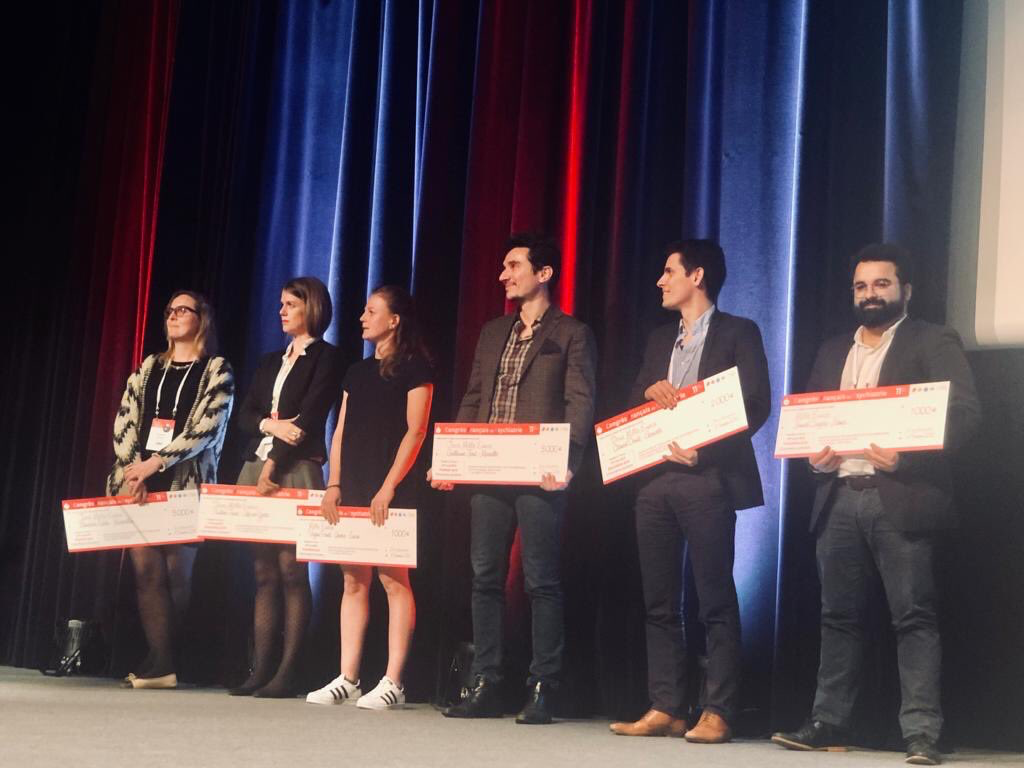
12/2019: I am very happy to have won the second prize for the best paper of the year at the French Congress of Psychiatry in Nice!
-
08/2019: Our ENIGMA paper on white matter abnormailities in bipolar disorder is out in Neuropsychopharmacology Click here to access to the full text. Check interactive results HERE.
-
10/2018: I am honored to receive the UNAFAM Research Award 2018. Check the video for more details.
-
10/2018 I am starting a new post-doc position at INSERM U955 in the translational psychiatry team.